What Is Secure Web Hosting and Why Does It Matter in 2026?
Published by: HostSecual
Parent Ecosystem: Leemeo
Introduction
Web hosting is the foundation of every modern website. Whether you operate a business website, WordPress blog, SaaS application, eCommerce store, or developer platform, your hosting infrastructure directly impacts:
- security
- performance
- SEO visibility
- uptime
- scalability
- user trust
Unfortunately, many website owners choose hosting providers based only on pricing. Security and infrastructure quality are often ignored until a website experiences malware infections, downtime, hacking attempts, or severe performance problems.
Modern websites face increasing cybersecurity threats including:
- malware attacks
- brute-force attacks
- DDoS attacks
- bot abuse
- plugin vulnerabilities
- phishing attempts
- ransomware
- server exploitation
Because of this, secure web hosting has become one of the most important parts of maintaining a stable and trustworthy online presence.
At HostSecual, the long-term infrastructure vision focuses on cybersecurity-first hosting designed for modern performance, Linux infrastructure, VPS scalability, and developer ecosystems.
What Is Secure Web Hosting?
Secure web hosting refers to hosting infrastructure designed with cybersecurity, server protection, threat prevention, and infrastructure reliability as core priorities.
Instead of treating security as an optional feature, secure hosting environments integrate protection directly into the server architecture.
Hosting Security Layers Diagram
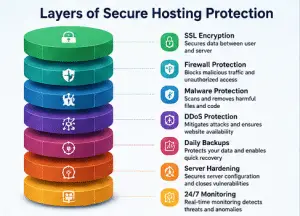
Core Components of Secure Hosting
| Security Layer | Purpose |
|---|---|
| SSL Encryption | Secure website traffic |
| Firewall Protection | Block malicious requests |
| Malware Scanning | Detect infected files |
| DDoS Mitigation | Reduce attack downtime |
| Backup Systems | Recover website data |
| Server Hardening | Improve Linux security |
| Monitoring Systems | Detect suspicious activity |
| Login Protection | Prevent brute-force attacks |
Secure hosting combines both infrastructure-level and application-level security.
Why Website Security Matters More Than Ever
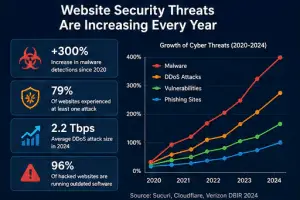
Cybersecurity threats continue growing globally.
According to the OWASP Foundation, insecure web applications remain one of the most common attack targets on the internet.
Even small websites are frequently targeted because automated bots constantly scan servers for vulnerabilities.
Common Security Risks for Websites
Malware Infections
Hackers may inject malicious code into websites through vulnerable plugins, weak passwords, or insecure hosting environments.
This can lead to:
- SEO spam pages
- phishing redirects
- browser warnings
- search engine blacklisting
- data theft
DDoS Attacks
Distributed Denial-of-Service attacks attempt to overwhelm servers with massive traffic requests.
Without proper mitigation systems, websites may become inaccessible.
Data Breaches
Weak server security can expose:
- customer information
- passwords
- email addresses
- payment data
SEO Damage
Compromised websites often experience:
- ranking drops
- indexing problems
- browser trust warnings
- lower crawl efficiency
- reduced user trust
Google may display security warnings for infected websites, significantly reducing organic traffic.
Cybersecurity Threat Visualization
How Secure Hosting Affects SEO
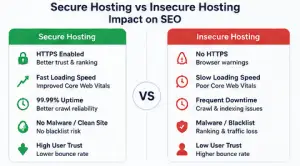
Website hosting quality directly affects SEO performance.
Search engines prioritize secure, stable, and fast websites because they improve user experience.
Hosting Factors That Affect SEO
| Hosting Factor | SEO Impact |
|---|---|
| HTTPS Security | Better trust signals |
| Faster Load Times | Improved Core Web Vitals |
| Stable Uptime | Better crawl reliability |
| Malware Protection | Reduced blacklisting risk |
| Secure Infrastructure | Improved user trust |
Google officially recommends HTTPS encryption because secure websites protect user data.
SEO Impact Comparison Graphic
Essential Features Every Secure Hosting Provider Should Offer
SSL Encryption
SSL certificates encrypt communication between websites and visitors.
Benefits include:
- secure login systems
- encrypted payment transactions
- browser trust indicators
- improved SEO trust signals
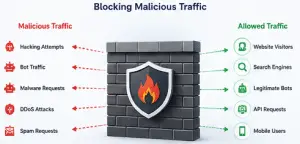
Firewall Protection
Firewalls help filter suspicious traffic before it reaches the server.
They can reduce risks from:
- bots
- exploit attempts
- malicious IP requests
- automated attacks
Firewall Protection Illustration
Malware Detection & Monitoring
Proactive malware scanning helps identify infected files and suspicious activity before major damage occurs.
Monitoring systems improve:
- threat visibility
- response time
- infrastructure stability
Automated Backups
Backups are essential for disaster recovery.
If a website becomes compromised, backups allow faster restoration.
DDoS Protection
DDoS mitigation systems help absorb attack traffic and maintain website uptime during traffic floods.
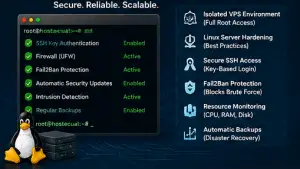
Why Linux Hosting Is Popular for Security
Linux powers a large portion of modern cloud and hosting infrastructure because of its:
- flexibility
- scalability
- stability
- security controls
Linux environments support technologies commonly used in modern infrastructure:
- Docker
- Kubernetes
- NGINX
- Redis
- Node.js
- Python
- LiteSpeed
Linux servers also provide advanced server hardening capabilities.
Linux VPS Security Infrastructure
Secure Hosting for WordPress Websites
WordPress powers millions of websites globally.
Its popularity also makes it a major target for attackers.
Common WordPress Security Problems
- outdated plugins
- vulnerable themes
- weak passwords
- brute-force attacks
- malware injections
- XML-RPC abuse
Secure WordPress hosting environments typically include:
- malware scanning
- isolated accounts
- login protection
- firewall systems
- backup automation
- caching optimization
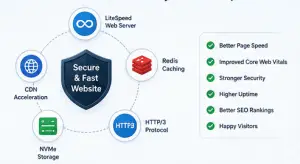
Performance and Security Work Together
Performance optimization and security are deeply connected.
Modern hosting infrastructure should prioritize both.
Examples
| Optimization Technology | Benefit |
|---|---|
| LiteSpeed | Faster performance |
| Redis Caching | Reduced server load |
| CDN Integration | Better global delivery |
| HTTP/3 | Modern secure connections |
| NVMe Storage | Faster data access |
Performance & Security Relationship Diagram
What to Look for in a Secure Hosting Provider
Choosing a hosting provider involves more than checking storage space and pricing.
Important Factors
Security Infrastructure
Look for providers offering:
- malware protection
- firewall systems
- DDoS mitigation
- monitoring systems
Performance Optimization
Modern websites benefit from:
- LiteSpeed
- Redis caching
- HTTP/3
- NVMe storage
- CDN optimization
Backup Reliability
Reliable backups are critical for disaster recovery.
Linux Expertise
Linux-focused infrastructure providers often offer better flexibility and server optimization capabilities.
Developer Ecosystem Support
Modern developers often require:
- Docker support
- Git deployment
- staging environments
- scalable VPS infrastructure
- API integrations
HostSecual’s Cybersecurity-First Hosting Vision
HostSecual is being developed as a cybersecurity-first hosting and infrastructure platform focused on:
- secure hosting environments
- Linux infrastructure
- VPS scalability
- cloud technologies
- WordPress security
- developer ecosystems
- performance optimization
- future AI infrastructure readiness
Rather than focusing only on low-cost hosting, the platform direction prioritizes technical reliability, infrastructure security, and long-term ecosystem growth.
Under the broader Leemeo ecosystem, the long-term vision includes hosting, cybersecurity, AI infrastructure, developer ecosystems, and technical education platforms.
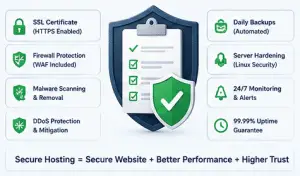
Secure Hosting Checklist Infographic
Frequently Asked Questions
What is secure web hosting?
Secure web hosting is hosting infrastructure designed with cybersecurity protections such as SSL encryption, malware scanning, DDoS mitigation, backups, and server hardening.
Why does hosting security matter?
Hosting security helps protect websites from malware, downtime, hacking attempts, data breaches, and SEO-related security problems.
Does secure hosting improve SEO?
Secure hosting improves website stability, HTTPS trust, page speed, uptime reliability, and user experience – all of which may positively influence SEO.
Is Linux hosting secure?
Linux hosting is widely used because of its strong security controls, flexibility, and server hardening capabilities.
Can shared hosting be secure?
Yes. Shared hosting can be secure if the hosting provider implements strong isolation systems, monitoring, backups, and proactive security infrastructure.
Why is SSL important for websites?
SSL encryption secures communication between users and websites, helping protect sensitive data and improve browser trust.
What is DDoS protection in hosting?
DDoS protection helps filter or absorb malicious traffic floods designed to overload servers and take websites offline.
Final Thoughts
Modern websites require far more than basic hosting services.
They need infrastructure capable of supporting:
- cybersecurity
- performance optimization
- SEO stability
- cloud scalability
- developer workflows
- modern application ecosystems
As cyber threats continue evolving, secure hosting becomes increasingly important for businesses, developers, and website owners.
HostSecual aims to build a long-term cybersecurity-first hosting ecosystem focused on performance, Linux infrastructure, scalability, and modern cloud technologies.
Under the broader Leemeo ecosystem, the objective remains building a globally trusted technology and infrastructure authority platform.